
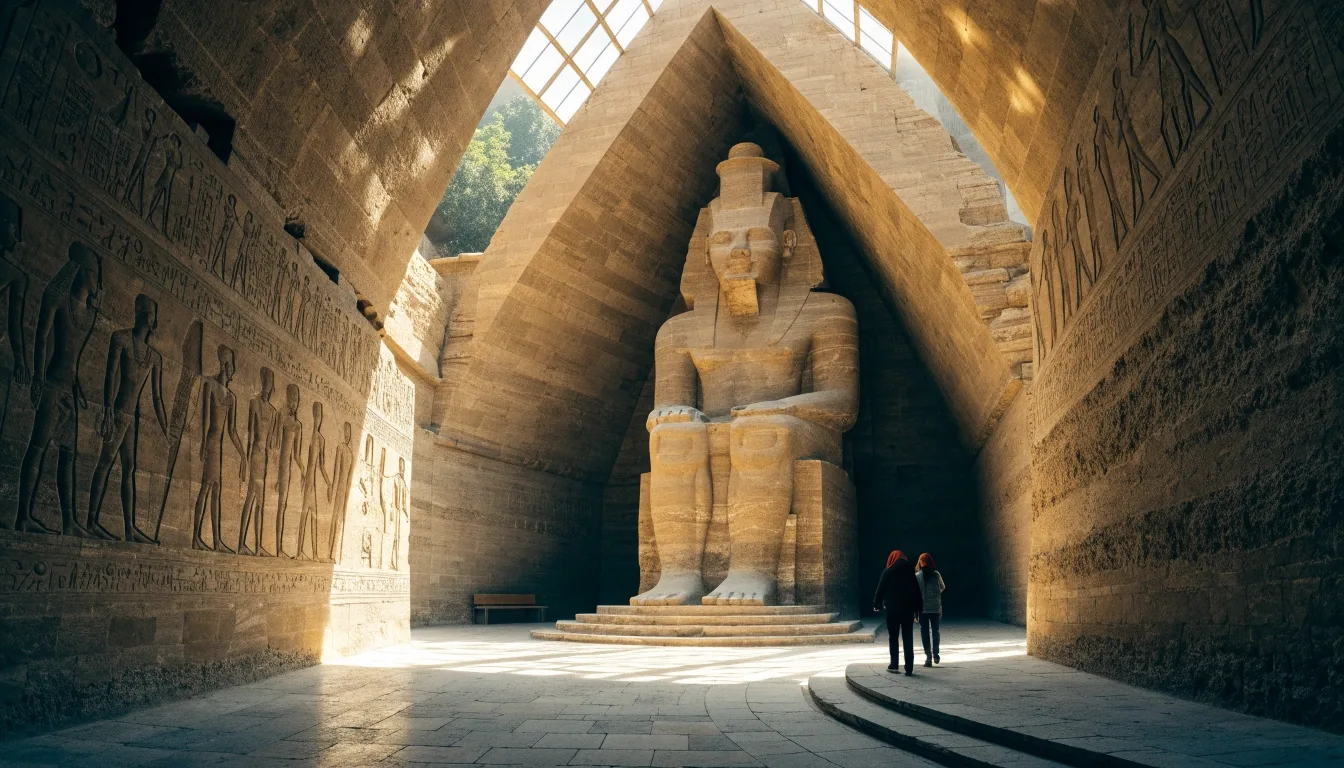
The Grand Hall and Grand Staircase
The ceremonial route through the grand egyptian museum — monumental scale first, galleries after. Meet Ramses II, the colossi and the climb in one strong walk.
Arrival route
Hall + Staircase · 20 min
Scale before detail
The Grand Hall and the Grand Staircase are the museum's ceremonial route, and they do something the individual galleries cannot: they let you meet the collection at full monumental scale. The staircase carries you upward past large-scale statuary, and the hall holds some of the biggest pieces on display, including the Ramses II statue and colossi linked in coverage to Heracleion.
If your time is limited, this is the route that gives you the strongest impression fastest. Visitors to the grand egyptian museum often start here to feel the size of المتحف المصري الكبير before they slow down for cases and labels.
20 min
Unhurried climb for the staircase alone, plus a few minutes standing in the hall. Most people stay longer for the view back down.
Grand Hall
First interior · 3 anchors
The Grand Hall as an arrival space
A large room with few, very large things in it. That is the whole idea.
The hall is the first major interior space most visitors encounter, and it is built around scale rather than density. Objects here are chosen because they hold their own in a large room, which means you are seeing pieces that would dominate a conventional gallery.
The effect is deliberate: you register the size of Egyptian monumental sculpture before you enter the more intimate rooms. Give yourself a few minutes just to stand and look before moving on. Let the eye travel from floor to crown, then walk the perimeter so the light changes on the stone.
The hall of the grand egyptian museum works best at a slow pace. Photographs flatten it. Standing under it does not.
How to read the room
Center floor
Pause and look up
Ramses II base
Walk the full circuit
Stair foot
Glance back at hall
Anchor piece
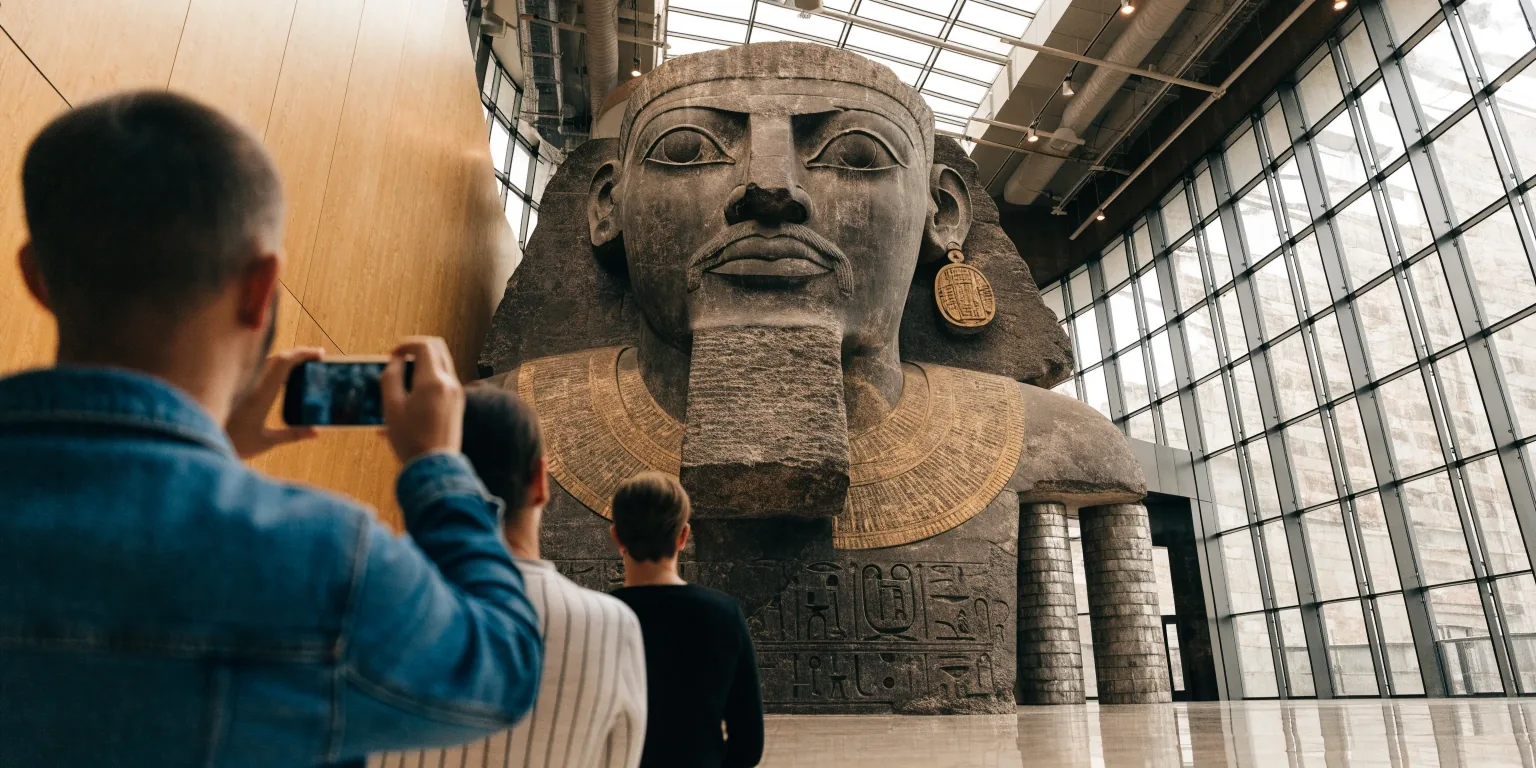
Ramses II · Grand Hall
The Ramses II statue
The Ramses II statue is one of the anchors of the Grand Hall and the piece most visitors photograph first. Its placement makes it a natural meeting point, which also means it is one of the busiest spots in the museum.
If you want a clear view, arrive early or come on a late-opening evening when the hall thins out. The statue is worth more than a quick photo: walk around it to see how the carving changes from different angles, from the weight of the legs to the calm of the face.
Guides for المتحف المصري often use this spot to start the story of kingship, so linger nearby for a minute and you will hear how one figure could anchor a whole hall.
Why the museum starts with kingsRecovered stone
Heracleion link · Labels on site
Colossi and the Heracleion connection
Some of the large statues in the museum are linked in coverage to Heracleion, the submerged site that produced major recovered antiquities. Their presence connects the museum to underwater archaeology and to the recovery work that brought these monuments back into view.
That is a different story from royal tomb material, and it broadens what the collection represents. Look for the labels that explain where these pieces came from and how they were recovered — stone that spent centuries underwater reads differently once you know its journey.
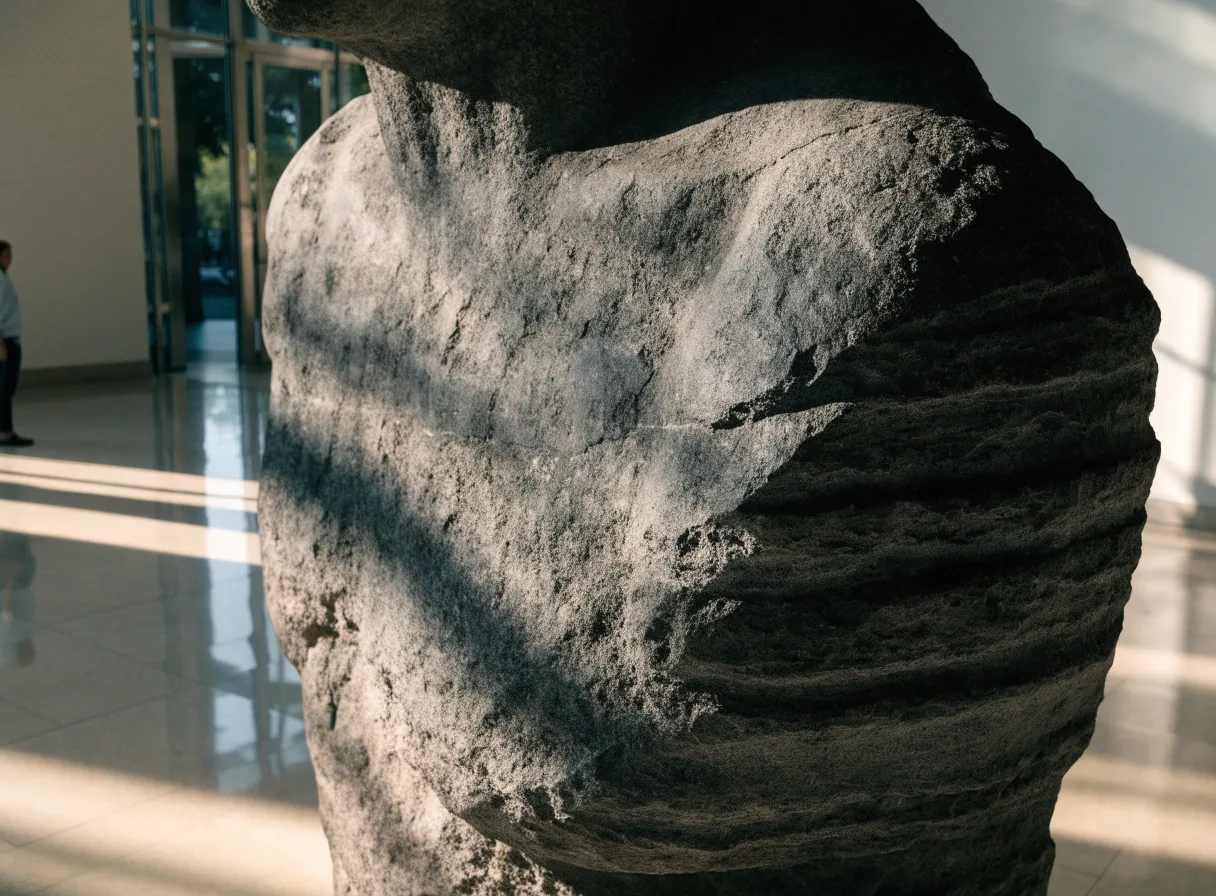
Colossal stone after recovery — surface wear tells the underwater story.
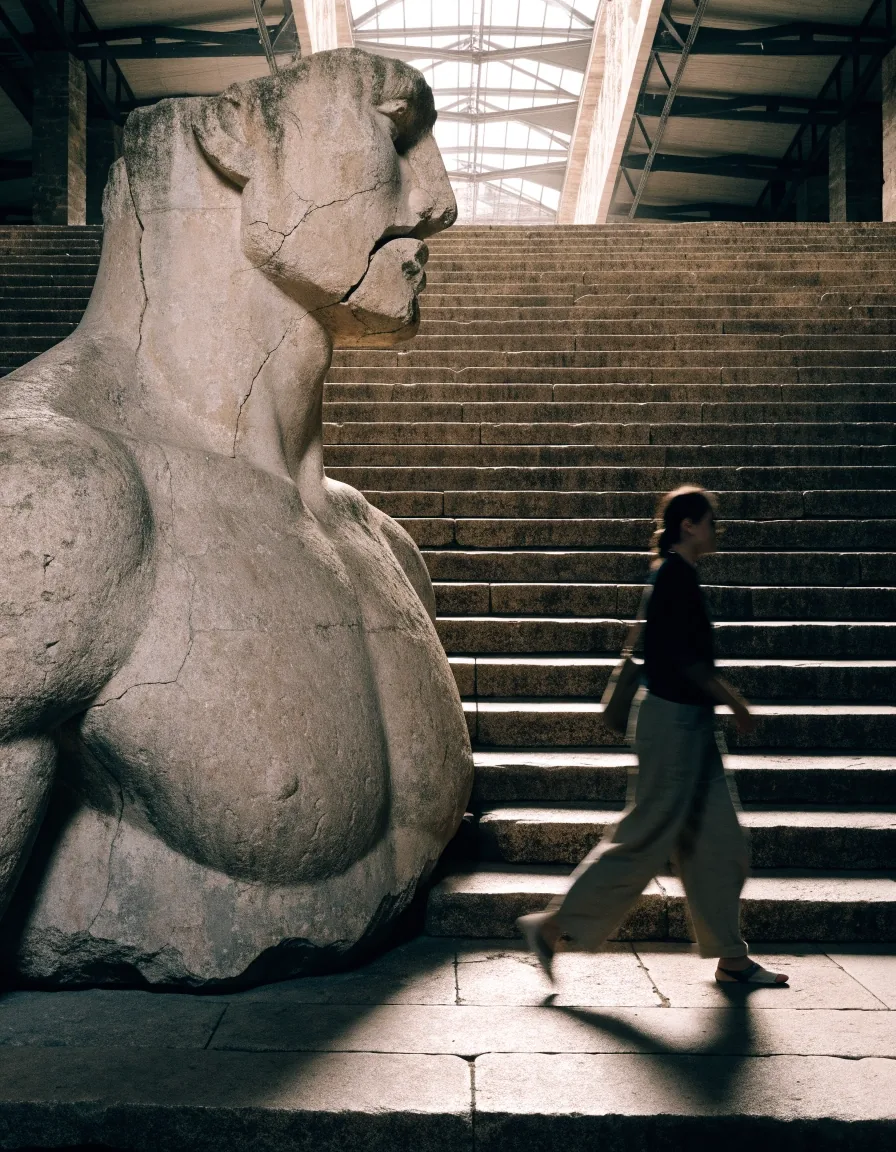
Standing close gives the true measure — labels note findspot and recovery.
Staircase route
Gallery and passage · Step by step
The Grand Staircase route
The staircase is both a circulation route and a display, carrying you upward past monumental sculpture arranged in sequence. Treat it as a gallery rather than a shortcut to the next floor.
The pieces are positioned so that you encounter them progressively, and the view back down over the hall is part of the experience. Budget fifteen to twenty minutes for the staircase alone at an unhurried pace, longer if you stop for photographs or rest on the landings.
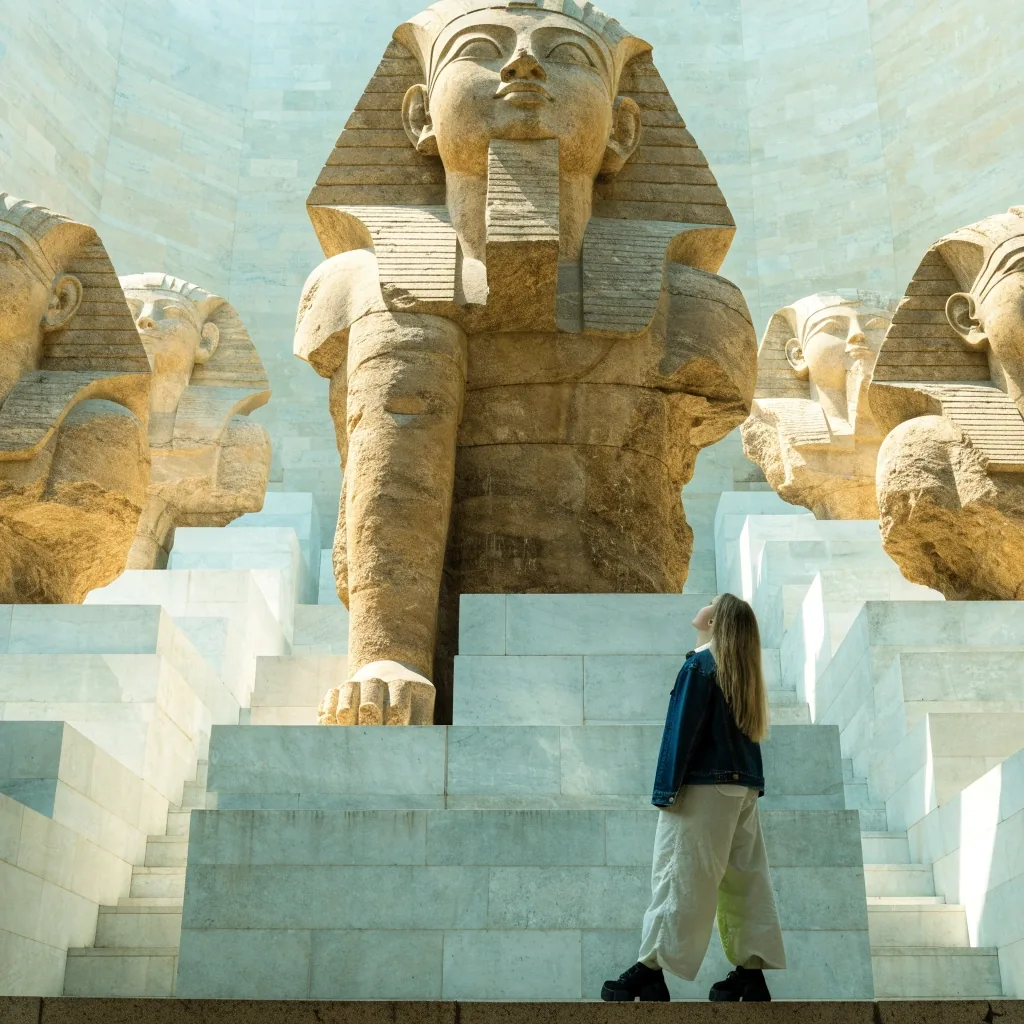
The staircase as gallery — climb slowly and turn back often.
A sensible pace
Why this route works for short visits
If you have a limited window, the Grand Hall and staircase give you the museum's strongest material in the least time. You see monumental statuary, the Ramses II anchor piece, and the recovered colossi without committing to the full gallery sequence.
That makes the route a sensible first stop even on a full-day visit, since it orients you before you go deeper. Do it early, then decide where to spend the rest of your time.
Check opening hoursCombining it with the wider collection
The Grand Staircase leads naturally into the upper galleries, which is how the grand egyptian museum intends you to move through the building. Following that flow means you see the monumental material first and the finer objects afterward, which mirrors the chronology in places. If you prefer to do the Tutankhamun galleries while fresh, reverse the order and come back to the staircase later. Either way, do not treat the staircase as something you pass through on the way to somewhere else — the museum of المتحف المصري rewards those who give the climb its own slot.
Visitor questions
3 answers · Plain words
What visitors ask about this route
What is in the Grand Hall?
The Grand Hall holds large-scale statuary, including the Ramses II statue and colossi linked in coverage to Heracleion. Expect few objects, all chosen for size and presence.
How long does the Grand Staircase take?
Fifteen to twenty minutes at an unhurried pace, though most visitors stop longer to look back over the hall. Add time if you read every label or rest on the landings.
Is this route good for a short visit?
Yes. The hall and staircase give you the museum's monumental material quickly, which suits a limited window. Start here, then choose one gallery to go deeper.
Start with stone, then choose your galleries
The grand egyptian museum sits at Kafr Nassar, Al Haram, Giza. Open daily 09:00 – 21:00. For hours, tickets and access details, check the practical pages or write to the guide team.