
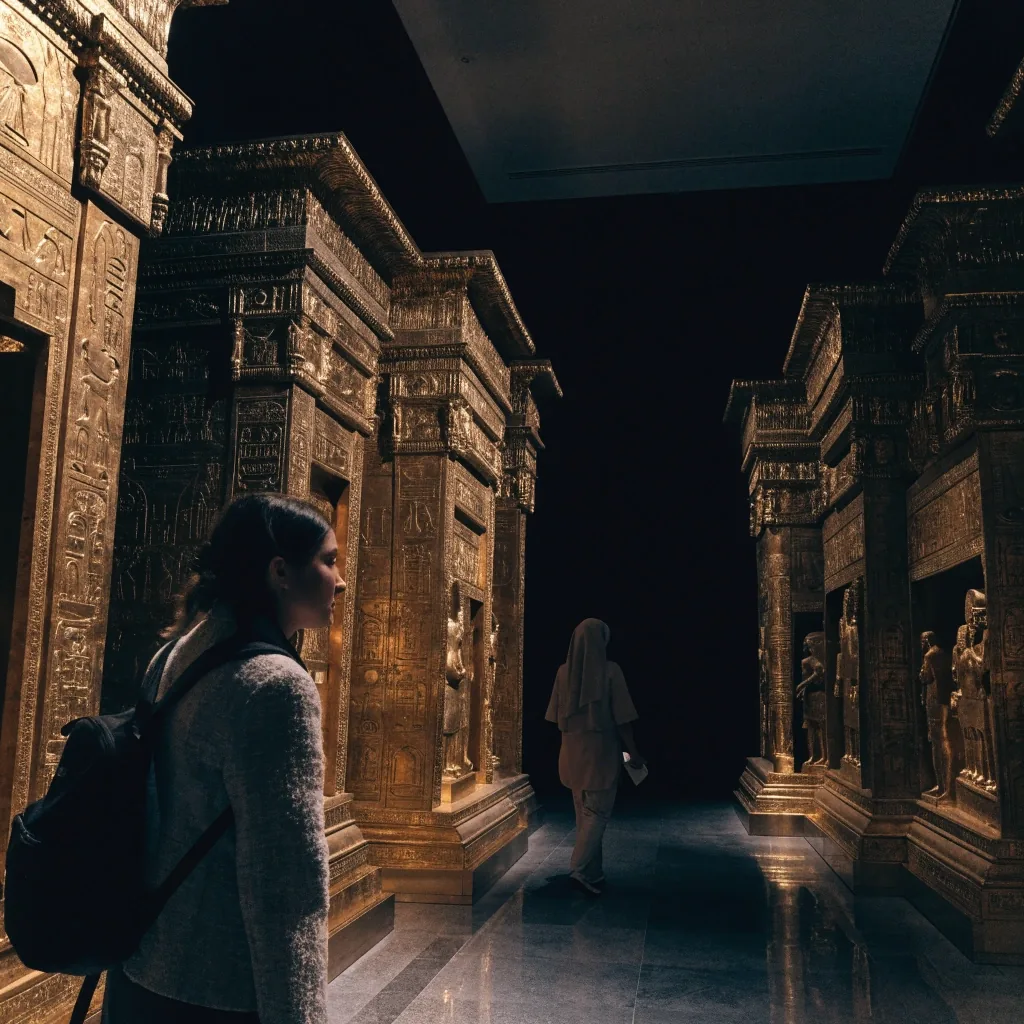
The Tutankhamun Collection in Giza
The complete Tutankhamun collection displayed together at the grand egyptian museum — one sequence from discovery to the smallest personal objects.
Why visitors come
One sequence · One hall
What complete collection means here
The galleries bring together the full assemblage recovered from Tutankhamun's tomb, displayed as one body of material rather than fragments distributed across sites. That matters because context is what makes the objects legible: a chariot fitting means little on its own, but in sequence with the rest of the burial goods it tells you how the tomb was equipped. At the grand egyptian museum, known in Arabic as المتحف المصري الكبير, the arrangement rewards visitors who read the labels rather than walking past them.
2–3
Hours to give the Tutankhamun galleries if you read and look properly
The collection sits as a single narrative at the grand egyptian museum in Giza, near the pyramids. The museum itself — المتحف المصري — holds this material as New Kingdom royal burial, not as isolated treasures.
Gallery order
Follow in order
How to move through the galleries
The sequence is laid out so you can follow it in order, and doing so is worth the discipline on a first visit.
Room
What to notice
Pace
Discovery and tomb plan
Start here. The layout of the burial explains why objects were placed where they were found.
Slow · 25 min
Chariots and equipment
Fittings, boxes and dismantled parts that show how the tomb was equipped for the afterlife.
Steady · 30 min
Funerary mask room
The focal point. Do not skip ahead to it — let the earlier rooms build the story first.
Patient · 30 min
Personal objects edge
Containers, linen, food boxes and everyday things. Quieter corners are usually at the room edges.
Slow · 35 min
Skipping ahead to the mask and working backward breaks the narrative the museum has built. If the rooms are busy, move slowly through the early cases and let the crowd flow past you toward the centerpiece.
Centerpiece and quiet cases
Mask · Daily life
The famous pieces and the quiet ones
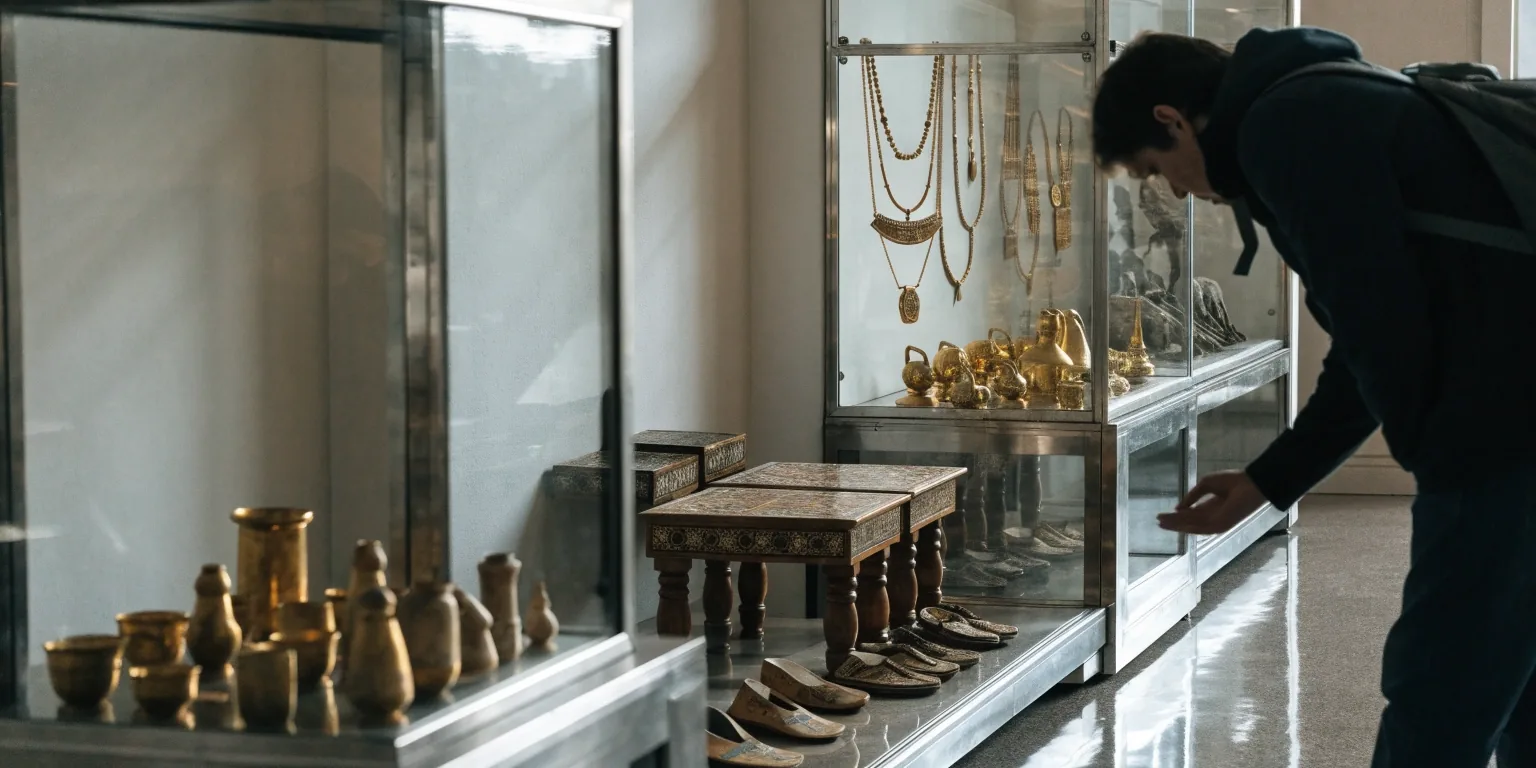
The funerary mask is the object most people come for, and it is the natural focal point of the sequence. Stand with it for a proper look, then keep going. The collection's strength sits in the smaller items: personal objects, containers and everyday equipment that survived because the tomb was sealed.
Those pieces are often what visitors remember afterward — a folding bed, a pair of sandals, a labeled box with food for the journey. Give the quieter cases as much attention as the headline displays, and read the short labels. They explain use, material and placement without long text.
Inside the rooms
Stone · Light · Scale
Time and pacing
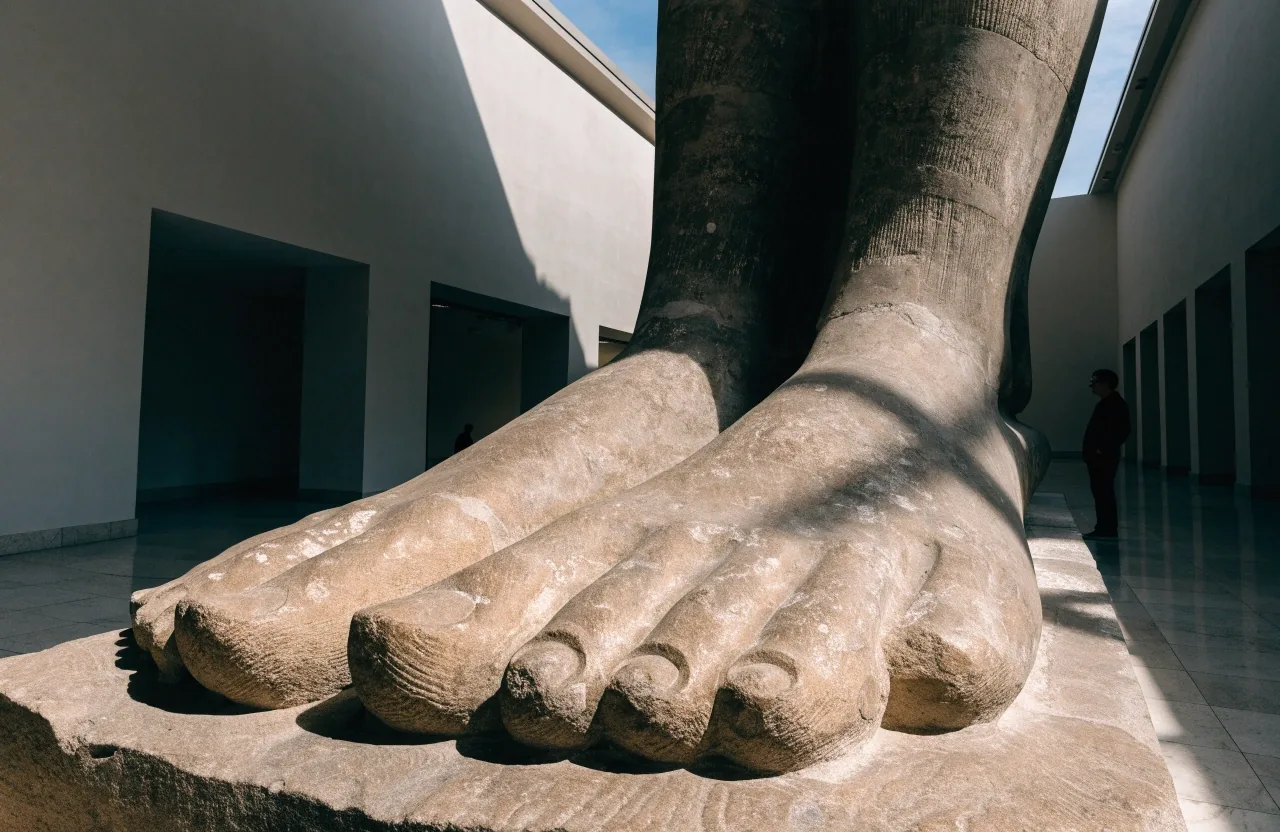
Stone mass and human scale — why these rooms absorb a full morning.
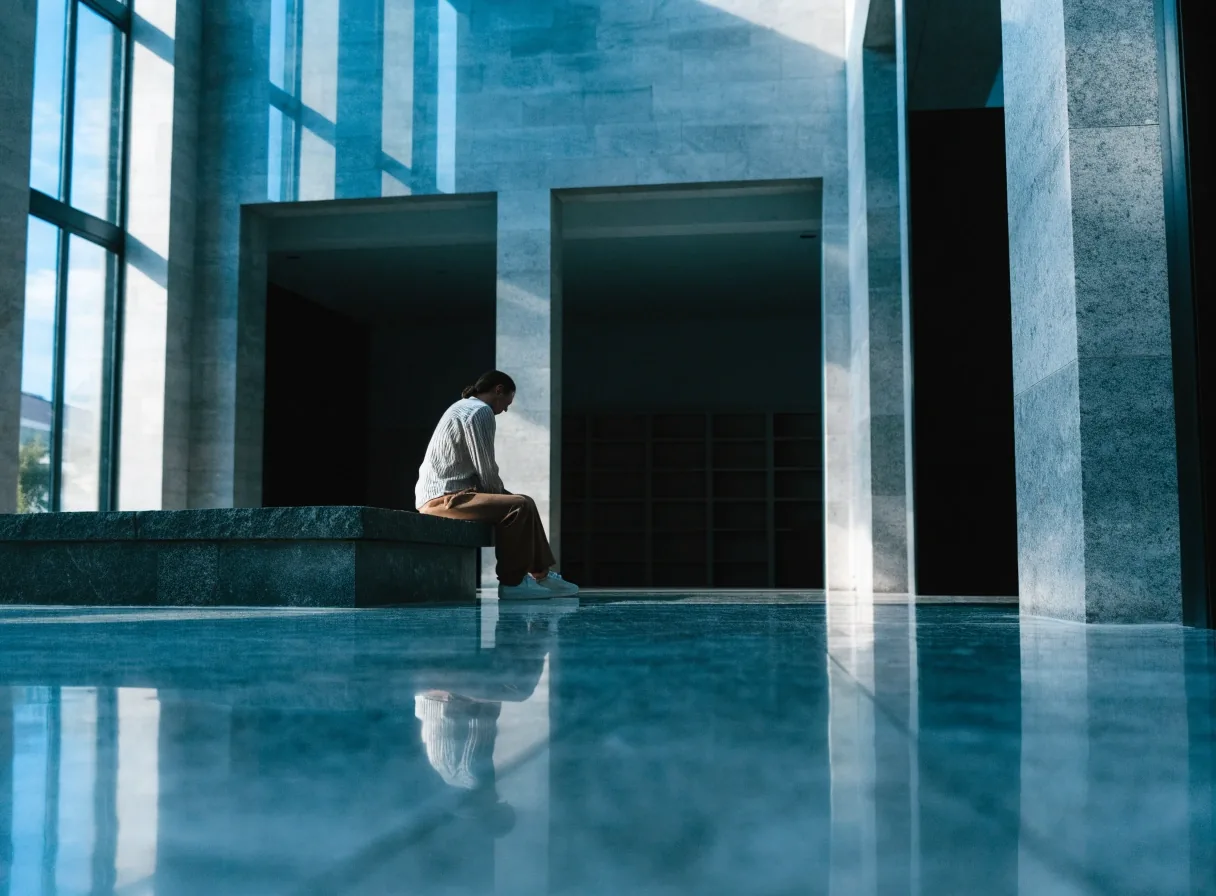
Polished floor and window light between the Tutankhamun rooms.
The Tutankhamun galleries alone can absorb two to three hours if you engage with the material properly. That is not a figure to rush. If you have only a half day at the grand egyptian museum, spend it here and skip the wider collection rather than trying to cover everything thinly. On a full-day visit, do this sequence first while your energy is highest, then move to the Grand Staircase and the rest of the museum.
Reading across time
Old Kingdom · New Kingdom
See the older burial rooms first, and Tutankhamun reads differently.
The Tutankhamun material is New Kingdom royal burial. After the Old Kingdom sections you feel how funerary practice changed over centuries.
Compare with the Khufu boats hallPractical conduct
Photos · Crowds
Photography and crowd management
Photography rules vary by gallery and can change, so check the current policy at the entrance rather than relying on what you read online. In practice, the Tutankhamun rooms at the grand egyptian museum are the busiest part of the building, and the crowd moves in waves. Standing still in a doorway blocks everyone behind you. Step to the side to look, then rejoin the flow, and you will see more in the same time.
Reading alongside other galleries
A useful counterpoint
The Khufu boats section, tied to Old Kingdom royal funerary culture, is a useful counterpoint precisely because it is older and less famous. If you are interested in how burial practice developed, do the earlier material first. If you want the headline experience while fresh, reverse the order. The museum called the grand egyptian museum — the grand egyptian museum guide notes this as المتحف المصري — makes either route easy to follow.
Learn how the museum is arranged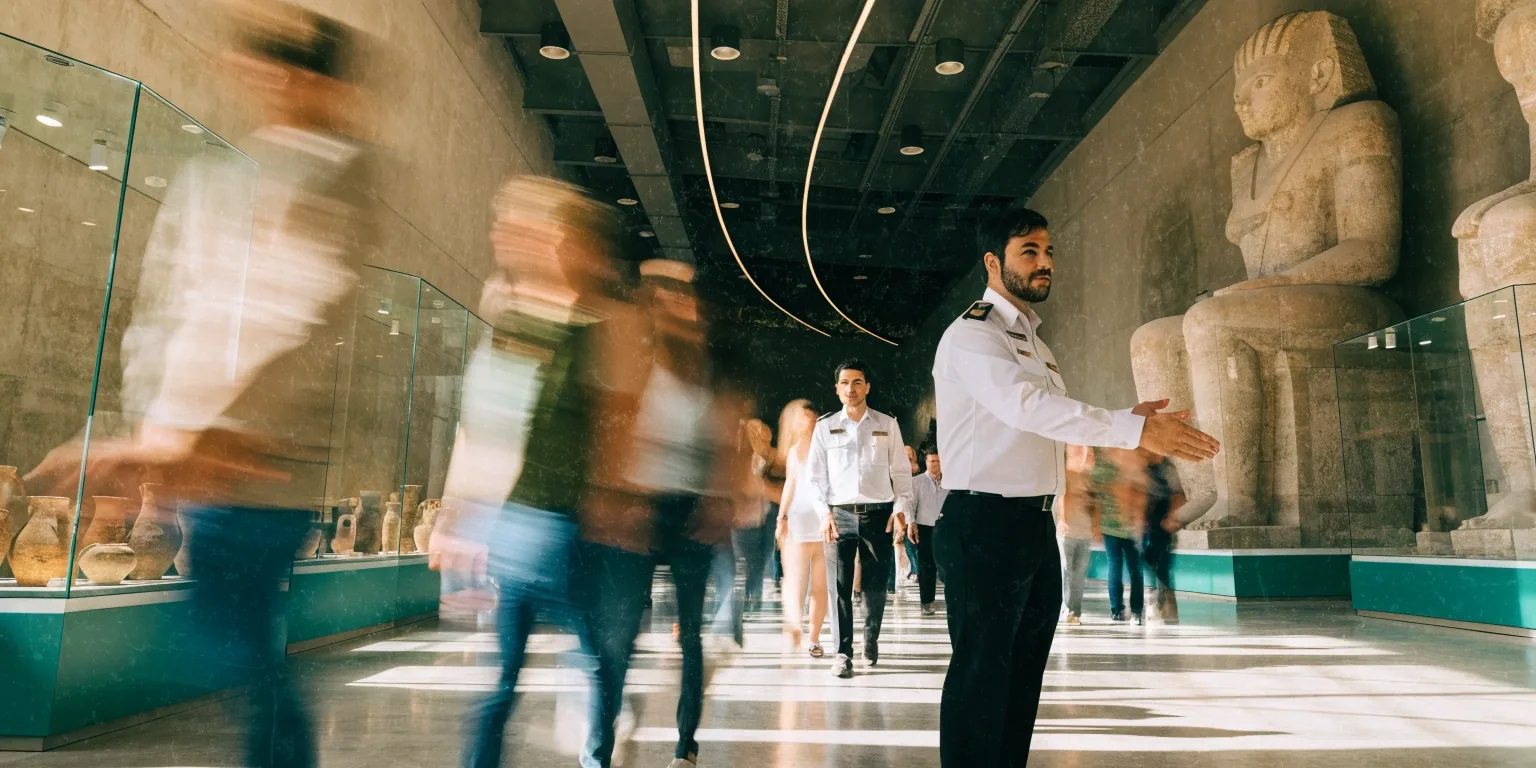
Morning flow in the upper galleries — step aside to look, then rejoin the line.
One visit, well used
Evenings · Tickets
Making the most of one visit
If this is your only visit, decide in advance what you want from it: the complete Tutankhamun experience, or a broader sweep of the museum. The collection rewards focus. Come early on a regular day or take a Wednesday or Saturday evening slot, and you will have more room to actually look. Buy through the official ticketing site so your entry is settled before you arrive.
The museum opens daily 09:00 – 21:00 at Kafr Nassar, Al Haram, Giza. For entry types and evening hours, check the tickets page before you travel, then keep this gallery page open for the walking order.
Is the whole Tutankhamun collection on display?+
Yes. The complete collection is displayed together at the Grand Egyptian Museum, arranged as a single sequence.
How long should I spend in these galleries?+
Two to three hours at a reasonable pace. Rushing the sequence is the most common mistake.
Can I photograph the collection?+
Rules vary by gallery and can change. Check the current policy at the museum entrance rather than relying on older information.
Visit: Kafr Nassar, Al Haram, Giza Governorate 3513201, Egypt · Phone +20 2 37763800 · Open Daily: 09:00 – 21:00